What's in the Air on Your Street? How to Check Air Quality by Address
By Estq Team
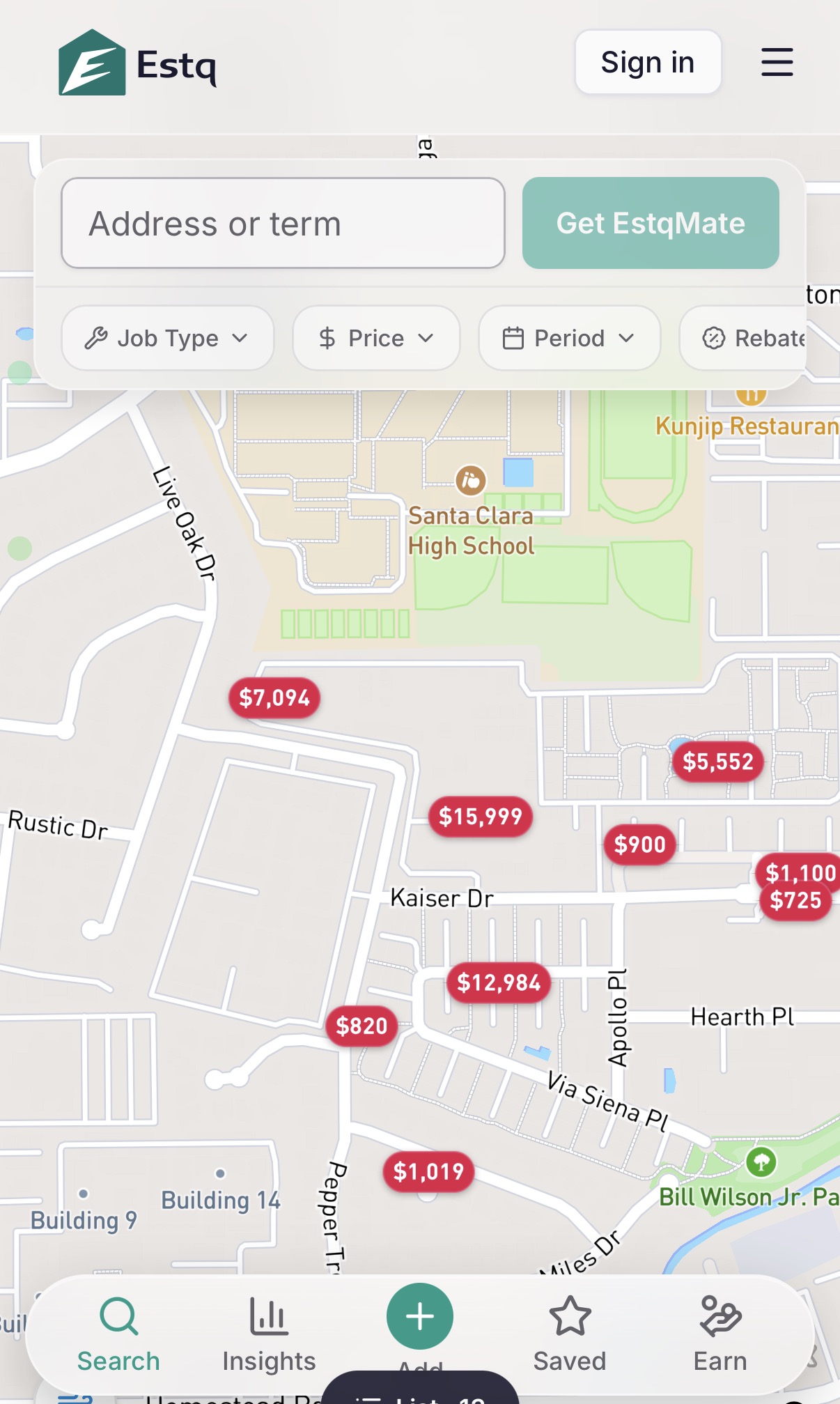
Most of us check the air quality the way we check the weather: one number for the whole city. But air isn't uniform. The block next to a busy road can look very different from a street three blocks away, and that difference affects your health, your windows, your HVAC system, and even how a home feels to live in.
Here's how to read air quality for a specific address and what to do with it.
Why the citywide number isn't enough
Official air quality readings usually come from fixed monitoring stations, which are accurate but sparse. Static stations miss traffic-related pollution, real-time changes, and hotspots. One station can represent a whole neighborhood, even when conditions vary from street to street.
Newer approaches close that gap. Our data partner Sparrow Analytics uses sensors mounted on moving vehicles. This lets it measure air quality at a very fine scale, down to about one square meter. The result is a picture of your street, not just your city.
The picture is often better than people expect. In one interview, Sparrow's co-founder said roughly 60 to 80 percent of city areas turn out to have good air quality. The point is knowing which areas those are, and where the exceptions are.
How to read an AQI number
The Air Quality Index (AQI) turns pollutant levels into one scale. The U.S. bands are:
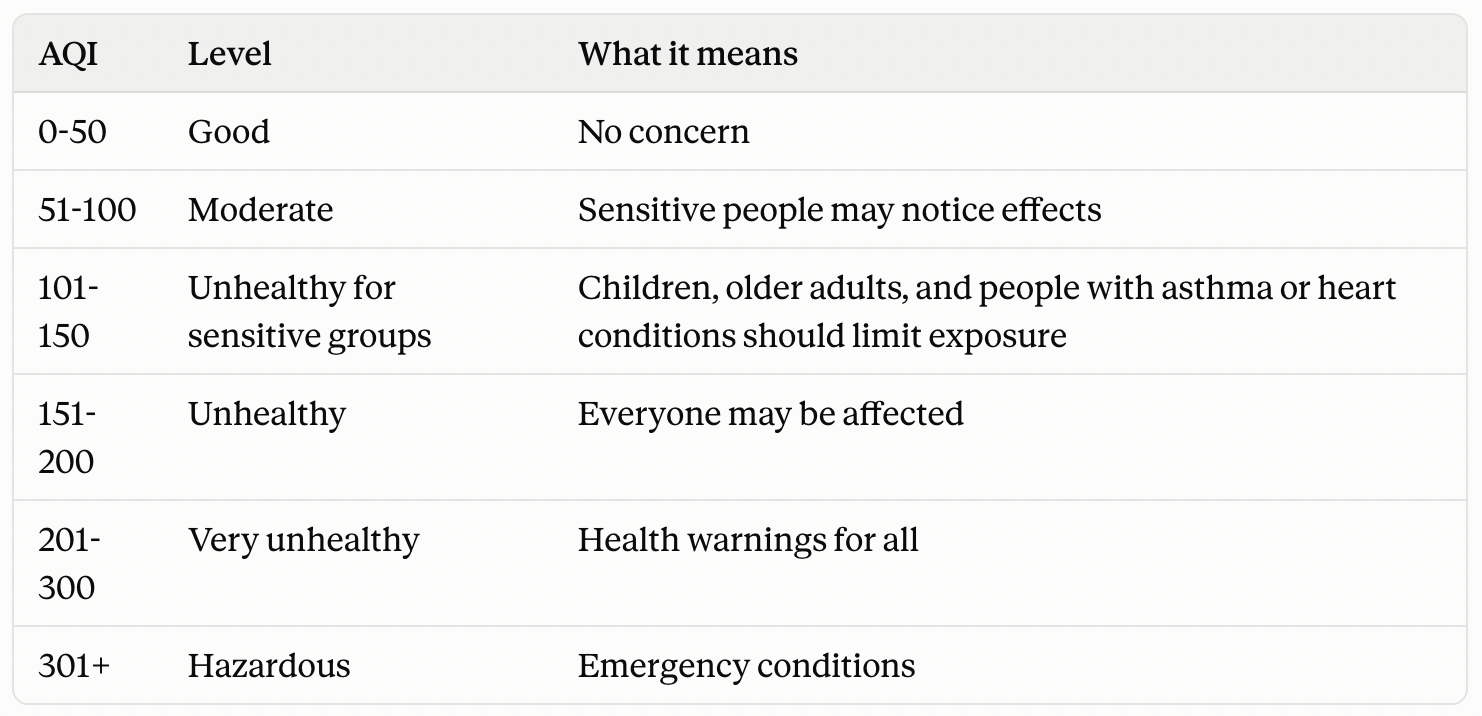
The main pollutant behind most bad days is PM2.5, fine particles from traffic, cooking, wood burning, and wildfire smoke. They're small enough to get deep into the lungs, and they also drift indoors.
What makes one street worse than another
Traffic. Busy roads, intersections, and idling traffic raise particle and nitrogen dioxide levels.
Terrain and layout. Valleys and narrow streets can hold pollution.
Local sources. Construction, industrial sites, and restaurants with heavy exhaust.
Smoke season. Wildfire smoke affects a whole region, but concentrations still vary locally.
What to do with the information
On a good day: open windows, ventilate, and cook with the hood on.
On a bad day:
Keep windows closed during the worst hours.
Run your HVAC on recirculate, if your system allows it.
Use a filter with a higher rating. Many homes can handle MERV 13, but check your system first, since a denser filter can restrict airflow on some equipment.
Consider a standalone air purifier for the bedroom.
Limit outdoor exercise when the AQI is in the unhealthy range.
Long term: if your street is consistently worse than average, better filtration, sealing air leaks, and well-maintained ducts make a real difference. Ask your HVAC contractor about filter upgrades, and about whether a dedicated air cleaning or ventilation system makes sense for your home.
Buying or renting? Add air quality to the checklist
You check the schools, the commute, and the noise. Air quality belongs on the list too. Two similar houses can have very different air depending on their location, and it's much easier to find out before you move in.
See it for your address on Estq
On Estq, you enter your address and see:
The air quality layer (AQI) on the map for your location.
Estimated costs for upgrades that improve indoor air, such as filtration or HVAC work.
Rebates that may apply to efficient HVAC upgrades.
Nearby projects, to see what neighbors have done.
FAQ
Is indoor air cleaner than outdoor air?
Not always. Indoor air can hold cooking particles, dust, and chemicals from cleaning products. It's usually better during smoke events, if the house is well sealed and filtered.
Do I need an air purifier?
If you live near a busy road, in a smoke-prone area, or have allergies or asthma, it can help. A properly rated HVAC filter is the first step.
Where does Estq's air quality data come from?
From our partnership with Sparrow Analytics, a provider of street-level air quality data.
Enter your address on Estq and see what's in the air where you live.
Keep reading
All posts →
Residential Insulation Estimates with Bay Area contractor
Leaking Water Heater?

ESTQ Partners with Sparrow Analytics for Street-Level Air Quality Dat
property air quality data, street level air quality, hyperlocal air quality data, home air quality, property environmental data, air quality by address, Sparrow Analytics, ESTQ, home environmental data, PM2.5 by address